Tejano Music

The Tejano Music Link ... I try to give my visitors my own views on all things tejano, but I start kind of hard with a new commentary about reclassifying, ranking, organizing, and categorizing our music - past and present. There's also 'to the heart statements' about how we lost everything we had. I added a few internet tejano music history articles from the past. You probably want to know why have all this info about tejanos? Honestly? Because I think our tejano 'lives' makes us so different than others. We're special, we are unique, and we are super great! We like all kinds of music! Yep, and that is super about us!

I've had this special link in just about every tejano music site I've had since the mid-1980s. But for some strange and unknown reason I have always felt - 'and to this very day' - that perhaps I missed something or my audience/fanbase somehow missed my point or message. Maybe it was the music content, the material, factoids, the raw data, conflicting issues, my picture gallery? Too many girls? LOL ... or my own controversial comments might have hit a wrong human mental fiber? Yes? No?
"Maybe my commentaries or music ideas were perhaps not in clear intent and/or not
important in this critical modern day and timeline of 2025-26."
... but after living in three states, you might consider me a nomadic navigator of sorts. No. I mean, it has been a charted journey of music experiences, diverse cities and states, different landscapes, done this and been there, and just connecting heartbeats with local communities, and adapting to new tejano music horizons. Having said that all this thinking and logic only bring me more music questions than answers. But let's move on.
Let's get down to it. My own conclusion on one element of tejano music has always been to 'reclassify tejano music' into its own categories. Calling simply 'tejano' is too broad of a spectrum and diversity in sounds. Why is this so important? Because music always had the upper hand to dominate the new and old, to change our lives completely, and is one universal language we can all understand. Many authorities have suggested definitions, but defining music turns out to be more difficult than might first be imagined, and there is ongoing debate with no end in sight.
Several explanations start with the notion of music as organized sound, but they also highlight that this is perhaps too broad a definition and cite examples of organized sound that are not defined as music, such as human speech and sounds found in both natural and industrial environments. The problem of defining music is further complicated by the influence of culture in music cognition. Throw in the towel, I guess.
But follow me on this critical issue. In reality, tejano music does have proud roots, but it has no foundation and/or business structure, it does not have definition, so, it's all mixed in there in one singular pot which looks like a Louisiana Gumbo. Tejano music must be reclassified for what it is on its own standard and merit - and for whom it stands for. Us. Our music does not belong mixed in with Norteno and Mexican music/CDs at some stores, and even at some record stores - if you are lucky to find them. Tejano music must have its own identity and culture; we are Hispanic Americans and must be recognized by the world music industry.
It would be better if we had new tejano music titles, sub-titles and directories under the headings such as, 'Tejano Music'. 'Traditional Conjuntos', 'Groups', 'Bands', 'Urban', 'Modern', and 'Progressive' ... [and again, just a few examples below.]
I have said it many times over the years, our true tejano music is extremely hard to play, hard to emulate, hard to learn, and hard to practice it too, let alone playing 'live' in front of an audience. But I am willing to compromise every step of the way with all of you, but unless we unite as one strong voice and heard around the country, all the tejano organizations in the world will not save our music industry. Rather, tejanos and tejanas will have a terrible downfall, a slow demise, and leave only memories to live on. I do not want that. Do you?
In contrast and due to the modernization of the world today, our much younger generation of tejanos, tejanas, and musicians, most of them have migrated or changed directions on us and gone to the generational cell phone world, to the R&B world, to rap, to low Fi, gone country, moved to the Latin international route, the Jazz scene, crossovers and at times half tejano music mixed in there with who knows what!
We're on our own to solve the tejano music identity and to keep it strong forever.


Traditional Conjunto
This heading could be the time and years when conjuntos started tejano music. This is our true tejano music history. El Valle played a big part in this timeframe of music.

Classic Tejano
Isidro Lopez broke barriers in his lifetime and changed bands into this new era of tejano music. It was a new beginning with the way tejano music would be played in the future.

Modern Tejano
I give credit to Little Joe and others for crossing over with our tejano music; started in the mid 1960s - better horn sections with dynamic rancheras, boleros, and cumbias.

Progressive Tejano
Tony 'HAM' Guerrero and his son, Alfredo, started a new urban and progressive tejano band sound a few years ago that is unmatched today. It's a totally new direction for our industry and needs our constant support to excel to new dimensions. Joe Posada is in this category.


FACTOID: Since the late 1970s, I’ve spoken, written, traveled, and stood in front of anyone who would listen about Tejano music - our music. I’ve promoted it, defended it, and pushed for change.
I’ve sat in Texas workshops, industry meetings, and community gatherings repeating the same message year after year: Tejano music needs unity, professionalism, and a higher standard of business.
Now, in August of 2026, as I approach 84 years of age, I have to be honest - that message hasn’t changed because the industry hasn’t changed. We still haven’t done the work. We still haven’t come together. And that reality saddens me. We have lost so much precious time doing nothing.
Talk less. Do more.
Tejano music has always had the talent. It has always had the heart. What it has never fully embraced is unity - true unity - the kind that builds an industry, not just a fan base.
The kind that creates opportunity, not just nostalgia. The kind that treats Tejano music as a business, not a hobby.
Back in 2021, I shared factoids about Tejano music awareness and total unity. I said then - and I say again today - that coming together as one familia is priority number one. It always has been. And if we want Tejano music to survive, grow, and reach the next generation, unity must finally become more than a slogan.
It must become action.
I may be an old dog from Texas, fading away with my old horse, and no bullets on my old pistol, but my message is still alive. My hope is still alive. And I pray that the next generation of Tejano artists, producers, promoters, and fans finally embraces the unity we’ve been talking about for nearly half a century.
Tejano music deserves that. Our cultura deserves that. And our future depends on it.
The Real and Absolute Transformation of Tejano Music
By TEJANOmike 04/08/2021 - 26
For the past 50 years, give a decade or two, our tejano music has gone through dramatic stages of changes and we could even say the word, evolution. And I have seen and lived through these transformations in Texas, California, and even here in Arizona.
This TM documentary will be hard to swallow and gulp down our throats, but, however, this is not to throw things in more disarray and out of conten, rather to see the present and future of our music industry. I am certainly not an expert or a musicologist to any degree whatsoever, but I do see things in a totally different musical perspective.
Our original tejano 'music and sound' which has been around for years - and most of us have heard it and danced to it - and of course we loved every minute of it. That is who we are as proud tejanos. Yet, like all things in life it is so hard to let go and/or accept new music trends on the radio, in social media, and on the internet radio stations.
But these modern music waves are here to stay and with no end in sight. How can we change or work with these modernistic non-tejano music intrusions, bombardments, and arrows thrown to our unique tejano culture? - and prevent our music from disappearing altogether?
What should be the first agendas on the tejano list of 2021?
Organization. Categorized. Implement. Unity.
Tejano music does have proud roots, but it has no foundation and/or business structure, it does not have a clear definition, so, it's all mixed in there in one singular pot which looks like a Louisiana Gumbo. Tejano music must be/should be reclassified, and reclassified for what it really is, and for whom it stands for.
Our music does not belong mixed in with Norteno and Mexican music/CDs at some stores like Wal-Mart, and even at some record stores - if you are lucky to find them. Tejano music must have its own identity and culture; we are Hispanic Americans and must be recognized by the world music industry.
For starters I strongly recommend three things that come to mind. I also think from my own perspective and point of view that they are all in parallel and they are:
-
We have no present and clear denominator within our infrastructure of our music; and in La Onda.
-
Our tejano music is in a transformational change that is hard for all of us to understand; causing us to lose focus and the impaired inability to make clear and important decisions. We all lose.
-
To some negative degree our music is not salable or is a marketable product, or in demand by sponsors, buyers, and overall consumers in this country and worldwide. We have too many independent music labels; we need an excellent organization.
In contrast and due to the modernization of the world today, our much younger generation of tejanos, tejanas, and musicians I would add, most of them have migrated or changed directions on us and gone to the R&B world, to rap, gone country, moved to the Latin international route, to the Jazz scene, with different crossovers that at times, more than half of our tejano music is mixed in there with who knows what!
My conclusion and debatable analysis tell me that all these transitional music periods and generations, family fusions, and incomparable age trendsetters - all these elements together and in one pie - have brought us to the apparent crisis and tejano division we see and hear today.
So, now what? Where do we go from here?
Let me emphasize these four words again:
Organization. Categorization. Implementation. Unification.
I do believe in ramped up positive synergy, interdimensional power, and the strong belief that if you want to do something great, well, you will do something great!
In our present day, tejanos and tejanas need to change the modern trends of an indecisive society we live in today and do it for future tejano generations to succeed and prosper; and our music to excel to new dimensions. It is up to us alone to set standard paradigms in the new Tejan[O]logy world of tomorrow. We stand on losing a lot if we do not do anything.
And where in the world is the TTMA in all of this? Hello. Where are all the principals of our Onda and music industry? Earth to San Antonio? Knock Knock! Anybody there?!


Tejano music is a vibrant fusion originating from Texas and Northern Mexico, blending traditional Mexican folk (rancheras, corridos) with European polka/waltz (accordion) AND American styles (rock, country). Key characteristics include lively rhythms, Spanish lyrics, prominent accordion/bajo sexto, and modern influences like synthesizers and cumbia beats.
Main Characteristics of Tejano Music
-
Instrumentation:
The accordion is central to conjunto-style Tejano, often paired with the bajo sexto (12-string guitar), bass, and drums. Modern Tejano often substitutes or adds synthesizers, saxophones, and electric guitars.
-
Musical Influences:
It fuses Mexican traditional music (ranchera, mariachi) with European styles (German/Czech polka, waltz). Later additions include rock, blues, country, and pop influences.
-
Rhythm and Dance:
Tejano is inherently danceable, featuring styles like cumbia, polka, and bolero.
-
Lyrical Themes:
Lyrics are usually in Spanish, or a blend of Spanish and English, covering themes of love, heartbreak, ranch life, and cultural identity.
-
Evolution (Subgenres):
-
Conjunto: Accordion-driven, traditional rural style.
-
Orquesta (Tejano big band): Incorporates brass sections (trumpets, saxophones).
-
Grupo (Modern/Progressive): Popularized in the 70s-90s, using keyboards and electric instruments, famously performed by artists like Selena.
-
Usage Examples and Synonyms
-
Usage Examples:
A typical conjunto set includes a lively cumbia for dancing or a slow, emotional ranchera ballad about heartbreak. A modern Tejano concert might feature a "techno-cumbia" with a heavy synthesizer bassline.
-
Synonyms/Related Terms:
Tex-Mex music, música tejana, conjunto music, norteño-tejano, Texas-Mexican music. [And don't forget the good food - tacos!]

"Why is it important to study Tejano and Mexican history?"
It’s important to study the history of our homeland; Texas in this case. It gives us a vantage point to see what it is that took place in the past, what people were able to do, and what struggles and successes they had. Whether it was in the colonial period or the period of the Texas revolution or in the 20th century, history is a good way to look at that. It also allows us to understand how people sometimes must struggle to see themselves as equal citizens in this evolving, complex society. It is us. Tejanos.
It gives us an opportunity to learn about the past and issues that took place and how leaders - social, political, and educational leaders - can resolve those problems and move forwards. This is an amazing history and story that continues to evolve.
"At the turn of the 21st century the tejano influence has declined in part due to decreased promotion, the rise in regional Mexican and other Latin music, the breakup or retirement of established performers, and the emergence of few new performers. Most tejano artists who performed throughout the 1990s during the music's peak/who are still performing today have rarely played to the same wide stream attention in recent years."
"Regardless, today's tejano music, while far more pop-oriented than its depression-era roots, is still a vital regional musical style in several tejano communities as well as in other parts of the United States.” Ouch. That hurts. But true.
The reciprocal of the above analysis:
From my understanding, from my own viewpoint, and not because I was a tejano musician either, but I truly believe that most tejano recording artists - [meaning all tejano music bands, groups, conjuntos - new/established icons in their own right, past and present] - have tried very hard to give the tejano community, the audiences in their state, while playing on tours, CD recordings and new releases ... they're doing their best to give you, [the tejano fan], the best they can ...
But they have slowed down a bit. Why?
Well, first, it takes money to record a new CD, add the studio hours, marketing expenses and overhead, money to pay all the musicians, money for roadies and logistics, etc. Inversely, there are not enough club gigs, not enough local dances, not too many tours anymore.
Furthermore, without any tejanos and tejanas involvement, without the support of tejano fans from all over the country, without any tejano music alliance and unity, without all of us helping each other for a new tejano music industry, without any social association and connectivity ... sadly, it will get worse. It will. We should have done this years ago.
Another Point Of View
The Integration of Tejano Music into Popular Culture
Tejano music burst onto the national stage in the late 20th century, blending traditional sounds with contemporary styles. This fusion attracted audiences beyond Texas and influenced various genres of American music. Selena Quintanilla-Pérez played a pivotal role in bringing Tejano music to mainstream attention in the 1990s. Her crossover success paved the way for other Tejano artists to gain national recognition. The genre’s incorporation of pop, rock, and R&B elements broadened its appeal.
Tejano music received its own category at the Grammy Awards in 1998, solidifying its place in the American music landscape. This recognition encouraged collaborations between Tejano artists and mainstream musicians, further expanding the genre’s reach. Tejano’s rhythmic patterns and accordion-driven melodies left a mark on country music, particularly in Texas. Artists like Freddy Fender and Rick Treviño successfully bridged Tejano and country, creating a unique sound.
Rock ‘n’ roll also felt Tejano’s influence, with bands incorporating Latin percussion and brass sections into their music. This cultural exchange led to the emergence of Chicano rock, exemplified by groups like Los Lobos - Mexican musical traditions - central to Tejano, found new expression in American popular music. This cross-pollination enriched the soundscape of both countries, fostering a deeper appreciation for Latin American musical heritage.
Contemporary Tejano Music Scene
Tejano music continues to evolve in the digital age, blending traditional elements with modern influences. New artists push the genre’s boundaries while honoring its rich heritage. Streaming platforms have expanded Tejano music’s reach beyond Texas. Artists like Intocable leverage social media to connect with fans globally. Online music stores and YouTube channels showcase both established and emerging Tejano talent.
Digital production tools allow for more sophisticated sound mixing. This has led to collaborations between Tejano artists and musicians from other genres, creating fresh hybrid styles. Young performers are breathing new life into Tejano music. Groups like Siggno incorporate rock elements, while AJ Castillo infuses his accordion playing with jazz influences.
The electric bass, popularized by Selena Quintanilla and the Texas Tornados, remains central to the modern Tejano sound. Artists experiment with electronic beats and synthesizers, pushing the genre’s sonic boundaries. Some performers blend Tejano with reggaeton or hip-hop, attracting younger listeners. Others, like Elida Reyna, maintain a more traditional style while addressing contemporary themes in their lyrics.
Tortillas and Tunes: Texas’ Tasty Tejano Tale
Texas’s rich cultural heritage has given rise to two beloved staples – tacos and Tejano music. These quintessential Texan creations have deep roots in the state’s history, blending influences from Spanish, German, and Mexican American traditions. Tejano music emerged in the late 19th and early 20th centuries as a unique fusion of Mexican folk music, polkas, and American frontier sounds. Early pioneers like Lydia Mendoza, Narciso Martinez, and Bruno Villarreal paved the way for this distinctive genre. As it evolved, Tejano incorporated elements of rock, country, and other styles, creating a sound that is unmistakably Texan.
Tacos, meanwhile, became a culinary cornerstone of Texas through a similar process of cultural blending. Mexican immigrants brought their traditional recipes, which adapted to local ingredients and tastes. Today, both tacos and Tejano music stand as proud symbols of Texas’s diverse cultural landscape, enjoyed by people from all walks of life across the Lone Star State and beyond.
Origins of Tejano Music and Cultural Influences
Tejano music emerged from a rich blend of cultural traditions, shaped by migration, revolution, and diverse musical influences. Its roots trace back to the late 19th century, evolving into a distinctive sound that reflects the complex history of Texas and its people.
Early Influences and Migration Patterns
Tejano music originated in the Texas-Mexico border region, drawing from Mexican folk traditions and European immigrant influences. German, Polish, and Czech settlers introduced the accordion, which became a defining instrument of the genre. The bajo sexto, a 12-string guitar, paired with the accordion to form the core of conjunto music.
Mexican corridos, narrative ballads, contributed storytelling elements to Tejano music. Polka rhythms from Central European immigrants blended with Mexican melodies, creating a unique musical fusion. This cultural mix reflected the diverse population of Texas in the late 1800s and early 1900s.
The Mexican Revolution and Its Impact on Tejano Music
The Mexican Revolution (1910-1920) sparked a significant northward migration, bringing an influx of Mexican immigrants to Texas. These newcomers carried their musical traditions, including mariachi and norteño styles. Revolutionary corridos became popular, chronicling the events and heroes of the conflict.
As more Mexicans settled in Texas, their musical heritage merged with existing Tejano sounds. The saxophone, borrowed from American jazz and big band music, was incorporated into Tejano ensembles. This period saw the emergence of orquesta tejana, a larger band format that combined traditional Mexican instruments with American brass and woodwinds.
The revolution’s aftermath solidified Tejano music’s role as a cultural touchstone for Mexican-Americans in Texas. It became a means of preserving heritage while adapting to new surroundings, shaping a distinct Tejano identity through sound.

Development of Tacos in Texas
Tacos in Texas evolved from their Mexican origins to become a beloved staple of Tex-Mex cuisine. Regional variations emerged across the state, reflecting local ingredients and cultural influences.
Mexican Roots and Texas Transformation
Tacos arrived in Texas with Mexican immigrants in the late 19th and early 20th centuries. Initially, these tacos resembled their Mexican counterparts – simple corn tortillas filled with meat, onions, and cilantro. As Texans embraced this portable meal, adaptations began to appear. In San Antonio, the puffy taco emerged, featuring a deep-fried corn tortilla. The Rio Grande Valley saw the rise of breakfast tacos, combining eggs with various fillings. Flour tortillas gained popularity, especially in South Texas, offering a softer alternative to corn.
Tex-Mex innovations like chili con carne and yellow cheese found their way into tacos, creating distinctly Texan versions. By the mid-20th century, hard-shell tacos became widespread, popularized by restaurant chains and convenience foods.
Variations of Tacos Across Texas Regions
Texas’s diverse regions each put their stamp on the taco. In Austin, the migas taco – featuring scrambled eggs with tortilla chips – became a breakfast favorite. Houston developed a fondness for fusion tacos, blending Mexican traditions with local seafood and international flavors.
The border towns of El Paso and Laredo maintained closer ties to traditional Mexican taco styles, often featuring grilled meats and simple toppings. Dallas embraced gourmet taco creations, with upscale restaurants offering unique ingredient combinations. West Texas saw the rise of the discada taco, cooked on a plow disc and filled with a mix of meats. In East Texas, barbecue influences led to smoked brisket tacos. These regional specialties showcase the taco’s versatility and Texas’s culinary creativity.
Years ago when I was working with a few Phoenix promoters and meeting a lot of Arizona musicians from the valley, I met one friend that was exceptional and he came up with a super idea for our music. His first opening line was, "Hey TEJANOmike. I have an idea, and hopefully you will like it as much as I do. Okay? Okay. Here we go." Then he went on talking ...
"Well, TM, you know a lot of people and musicians in our Onda, right? So, I was thinking, why not gather some of the best musicians from San Antonio? or Texas? or from around the country? then make up a bad ass tejano orchestra ... [you can talk to the main tejano artist and bring the idea to him/her and to all the musicians in the new band] ... then set up a tour in all major cities and do a concert about our tejano music legends. What do you think? And I'll go along and help you all the way."
Just when I thought he was done, he continued on, " ... and TM, if possible, do the concert about all the history of our Onda, you know, start the show and concert with music from the beginning of our history, go to the 1940's, 50's, 60's ... then an intermission ... come back to the stage and start with the 1970's, 80's, 90's and all the way to the present."
But, what a great idea, indeed. Maybe we could start small in the beginning, and year after year getting better and better. Another important way to look at this would be to see it as a historical museum show, a cultural event, or as a tejano music heritage concert.
There is another way of doing this. Why not have, for example, David Marez, do a show/concert about all his past music and on to the present. He could start playing all his past hits - from his first recordings to his new music of today. He could play two sets. The first show would be like an hour of his previous hits, intermission, then another another hour and a half to close the show.
Another words, the music and backdrop, all his pictures and memorabilia, music and show, meet and greet with the artist also, everything that is, would be about David Marez.
The upcoming list of tejano artists is endless, I mean, after David Marez, the same band could back up the Jay Perez show, then the DLG concert, then RAM, add Little Joe, Carlos Guzman, Freddie Martinez, and so many others. Also add the tejano female mainstream singers to the concert series.
End results?: Doing these shows and concert series is just more tejano music entertainment for all the tejano music fans in our country and the fanbase around the world too.


To Be From Texas: The unique culture and challenges which come with being tejano / By Joycelyn Cabrera / Arizona Magazine
Jesus wiped the sweat off his brow as he kicked his stolen horse. It's 1905 and they’re about to cross the Rio Grande River. The banditos he left behind are probably realizing something is wrong by now, but he is hours ahead of them, and once he crosses the river, they’ll never find him. He took a breath, felt the horse underneath him tense, and in one moment of truth, one final leap of faith, he heard the roar of the river behind them. Safety.
Jesus grew up in a village somewhere in Tamaulipas, Mexico. Slowing down, looking back at the life he left behind, he signaled his horse to keep going. At 15 years old, he had the rest of his life ahead of him. In 1905, my great grandpa found a ranch in what today is considered Beeville, Texas. He met with the rancher who agreed to shelter him and let him work for his dinner, in exchange for the horse.
Jesus would later marry the rancher’s daughter, move to Brownsville and start a family. They would strive toward achieving the American Dream while also keeping in touch with their roots. Jesus lived to be 101 years old. Now, forget about Jesus. Let's talk about the rancher, my great-great grandfather.
This ranch was well-established and had been in the family for at least a generation. My great-great grandfather inherited it from his father, which puts the ranch, at its youngest, at 115 years old.
This man, and the rest of his family, had never moved from that spot as far as we know today. Which means he never crossed any border, unlike Jesus. For my ranchero ancestors, the border moved around them. They've always been true Tejanos. Texans of Mexican descent - descendants of Spaniards and Mestizos - are a people who have been in the same area of North America for generations. From Native Mexicans to proud Texans, to everyday U.S. citizens, Tejanos are their own subculture under the Hispanic umbrella.
Tejanos were vaqueros (what most people recognize as cowboys, and with the job came a blend of music, food and values. Our music features an accordion instead of a tuba, and our legendary singer is Selena Quintanilla instead of Mexico's beloved Vicente Fernandez. Tejano food, or Tex-Mex, is known for using more meat and cheese than typical Mexican dishes, with cattle products being the most common (barbacoa, carne asada, fajitas, etc.).
Professor Irasema Coronado is an expert on human rights on the U.S.-Mexico border, currently director and professor of ASU’s School of Transborder Studies. "Tejanos have their own music, their own dance, their own history, their own culture, their own language," Coronado said. "It's a very old, rooted culture in that part of Texas."
Today, it’s hard to put a number on just how many Tejanos are currently in Texas, as Tejanos are formally defined as Texan residents of Mexican descent. Census data will give plenty of statistics on Hispanic and Latine residents of Texas, but not Tejanos. Professor Carlos Vélez-Ibáñez, currently Regents' Professor of the School of Transborder Studies and School of Human Evolution and Social Change, said the history of South Texas is complicated due to generations of revolutions, land grabbing and countless immigrant groups coming to the state from the east and south borders.
According to Vélez-Ibáñez, it only takes one generation to become Tejano. "You can rest assured that Texans of Latino or Hispanic descent are most likely Tejanos," he said. Hispanics made up 83.8% of the population in South Texas according to the 2019 state population estimate. Not all Tejanos describe themselves as such, and not all Tejanos know of their ancestry and generational line attached to the state of Texas thanks to violence, systemic racism and generations of conflicts and contradictions. But the people are there, the culture is there, and the struggles are still there. Some of them may not be in Texas anymore, but their roots are still Tejano.
"There's a whole cultural package that goes with being a Tejano," Coronado said. "Not everyone has the same experience, but it's important to know that there's this unique and special culture in South Texas - its history, its music, its folklore ... it’s a special place."
The No. 1 trait I’ve seen in every single one of my Tejano family members, and frankly, in myself, is an unrelenting pride and stubbornness for what they believe is theirs, what they believe is true and what they believe is right. For my family, being Tejano is a source of pride, and Tejanos living in Texas right now, living in the same place they’ve lived in for generations continue to strengthen their identities. Many Tejanos living in Texas during the 1800s never crossed a border, much like my own great-great grandfather. Instead, the border moved around them over time.
Texas had been part of Mexico up until Texas declared itself an independent nation in the mid-1830s. Texas was annexed by the United States in 1845, an annexation recognized by Mexico only after the conclusion of the Mexican American war three years later, with the Treaty of Guadalupe-Hidalgo. Then, in the 1860s, Texas declared its secession from the U.S. to join the Confederacy. Even with this timeline, the Texas-Mexican border has always been fuzzy.
"El Valle has always been a center of conflict," Vélez-Ibáñez said. "South Texas has been a mural of conflict." Both Coronado and Vélez-Ibáñez mentioned the infamous 19th century Texas Rangers, who were known to be notoriously violent and brutal in their treatment of Hispanics and Latines in South Texas. Vélez-Ibáñez recounted the history of the Texas-Mexico border, or lack thereof, calling it "insignificant" for many decades. From a river to a yellow line, to a road, to a chain-link fence, Vélez-Ibáñez said there was hardly any difference between places like Nogales, Arizona and Nogales, Sonora. In South Texas, the differences were even smaller.
Additionally, Border Patrol, as we know it today, was only established in the early 1920's as a result of the Immigration Act of 1917, the second law after the 1882 Chinese Exclusion Act to restrict immigrants from entering the U.S. along the Mexican border. The 1882 act was the first time a type of U.S. immigrant was considered "illegal." Ultimately, it wasn't unusual for Jesus to have crossed into the country the way that he did, and it was even more common for men like my great-great grandfather, the rancher who took him in, to say he was from Texas. The tight border security Americans are used to in the present is considerably new.
Now, when people ask members of my family where we’re from, the following conversation ensues:
"Where are you from?"
"Texas."
"No, but where is your family from?"
"Texas."
"But before Texas?"
"We've pretty much always been in Texas."
For as long as I can remember, I've heard stories of my family. From my great-great grandfather always being here, to my great-grandfather creating a life in Brownsville, to my grandfather serving in Vietnam and earning a Purple Heart. My family has been a part of this country’s history since quite possibly the beginning. And yet, my family has struggled well into the present day. After returning from Vietnam, Jesus Jr. wasn’t able to get assistance for his PTSD, given the lack of a Veterans Affairs hospital in South Texas until 2009. The machismo which ran alongside Tejanos certainly didn’t help him get diagnosed either.
Machismo culture is a pattern among Hispanic and Latine men who exhibit exaggerated masculinity, often taking pride in the outdated ideal of "being manly." One of the biggest setbacks of machismo culture is the discouragement of men to feel their own emotions, or seek help for mental and physical health issues.
Their luck continued to fall.
Suddenly, my family found themselves living in the projects, and mine isn’t the only one. Dating back to the early 19th century, Coronado said Anglos in the area were able to take advantage of Mexicans with property taxes and new business practices they were unknowingly imposed with, causing them to lose investments. "They started to lose ranches and assets and resources that they had, and then we became an underclass," she said. Today, systemic oppression in the region can be traced back to roots of a constantly conflicting population. "Low income, no health insurance, very little resources, very few institutions of higher learning, so the opportunities for upward mobility are limited," Coronado said.
Thousands of Tejanos experience a particular struggle in the U.S., with prejudice, patriotism, machismo, pride and an unrelenting stubbornness. Tejanos have faced challenges in reaching the American Dream even though plenty of them have been Americans for generations. "We call them projects because they're government housing. But they're literally a housing project, as in, a project to keep low-income people housed," my dad once said. "When I lived there, my whole day was consumed with, 'How do I get out of here?'"
Approximately 23% of Hispanic residents of Texas live below the poverty line, with Hispanic residents making up approximately 38.2% of the population in the state. Counties which cover South Texas are among the poorest counties in the state, with high Hispanic populations. "Any opportunities for upward mobility are limited because you have to leave where you are from if you're going to get a degree or some form of higher educational experience," Coronado said. "You don't pass on generational wealth because you don’t have any."
But getting out of poverty didn’t help my dad avoid prejudice. More than once, he would come home from work exhausted, on the phone with a friend or colleague, venting about how he heard the dreaded phrase again that day, "Oh, not you though. You're not like them." It’s a far cry from, "Go back to your country," but still full of hate. We are Mexican, we are Tejanos, and this is our country. We, along with an unknown multitude of Tejanos, have always been here. "Mexico never left," Vélez-Ibáñez said. "It just became English-speaking."
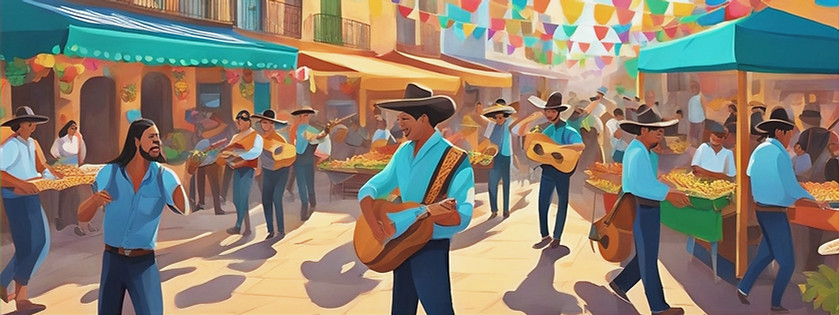
"What Is Tejano Music?"
1) Tejano music, also known as Tex-Mex music, is a popular music style fusing Mexican and US influences. Typically, Tejano combines Mexican Spanish vocal styles with dance rhythms from Czech and German genres -particularly polka or waltz. Tejano music is traditionally played by small groups featuring accordion and guitar or bajo sexto. Its evolution began in northern Mexico.
2) Music is something enjoyed all over the world. It brings entire nations, and people together. With time, different ethnicities have put their twist to the tunes and have come up with new genres of music. One such very popular genre is Tejano Music. Tejano is a blend of European, Mexican, and American music styles. It is now enjoyed both nationally and internationally.
3) Tejano music is a genre of music born in the states of Texas and Mexico in the 18th century. Over three centuries, Tejano music has absorbed a lot of different styles, and instruments. The music features tunes from the Czech Republic and Germany, especially polka, and waltz.
Here’s why the genre is called Tejano Music. The name Tejano was given to Mexican Americans living in Texas. The music is played using the accordion and has since developed from being a small genre of music to being played on large stages worldwide. Tejano music was born in Texas, near the Mexican-Texas border, and in Northern Mexico. The origins of the genre can be traced back to people from Germany, Poland, and the Czech Republic, migrating to the US.
These people influenced the Tejanos by their polka music and accordion. The accordion would go on to be the major instrument used to make Tejano Music. The music gained immense popularity with the working class. The Mexican working class spends days working and music is the perfect way to loosen up. Soon musicians and small bands became very common at festive events, and pubs and taverns.
These small bands were called orquestas and included musicians that played the accordion, flute, guitar, and drums. Finally, the genre gained popularity after famous artists got their music recorded. More and more people heard Tejano Music through the radio, and later the television. Tejano Music is important for the Mexican American people, not only because it is a part of their history, but also because it has kept their identity alive. In the racist times of the 1800s and 1900s, Tejano music was a way to bring Mexican Americans out to the world.
Texans - One and All
European Spaniards and their descendants - other than Native American groups - were the dominant peoples of Texas for more than three centuries. From the beginning of the 16th century until well into the 19th, the Spanish changed New World history, native peoples, and even the land. The Spanish came to Mexico and Texas as conquerors - soldiers, settlers, and priests. Other than exploitation of natural resources (gold, silver, timber, fibers) and human resources (Indian slaves), the Spanish goals were to impose religious and social orders on the natives and to set up a civilization patterned after what had been accomplished in Europe.
Texas remained a frontier under the rule of the Spanish, but the conquerors were relatively successful, considering their small numbers. To some degree, the Spaniards were changed by the land and the people they found. Spanish religion and temperament condoned (and even encouraged) mixed marriages. Spanish law generally extended social rights to all free or freed people, whatever the mix of European or Indian or African, although government employment of any high rank was reserved to those of “pure” Spanish blood.
In the New World the Spanish Indians, the mestizos, quickly became numerous and important. The first generations in Texas and later descendants were called, and called themselves, Spaniards, Mexicans, Tejanos, Texas Mexicans, and, in recent years, Hispanics, Latinos, Mexican Texans, Mexicanos, Mexican Americans, la Raza, Chicanos, and, again, Tejanos.
One single name has never been accepted by those of Spanish Mexican Indian descent, and some names have been socially or politically rejected by nearly all. Besides, immigrants to Mexico have arrived from many countries, including Ireland, Italy, England, and China. And descendants of such immigration have come to Texas. Like the mixtures of those who call themselves Anglo, the Spanish, or Mexican, or Tejano “culture” is not a single set of beliefs or activities. But by whatever name, the first Spaniards, later to be Mexicans, came to change things - and did.
Into a land that would become Texas, a place which was in anthropological terms, nearly a Stone Age, the Spanish brought European horses and armor and firearms. They also brought ranching and farming traditions of Spain, legal and religious systems of tremendous power, architecture, printing, a common language and literature, European crafts and arts, as well as cows, sheep, donkeys, goats, chickens, and pigs, and grapes, peaches, and other crops, along with devastating diseases. Things would never be the same again. [By John L. Davis, Institute of Texan Cultures]